


Interactive Feed
Feed, Activities, Posts, Comments, Reactions

How I Process Design
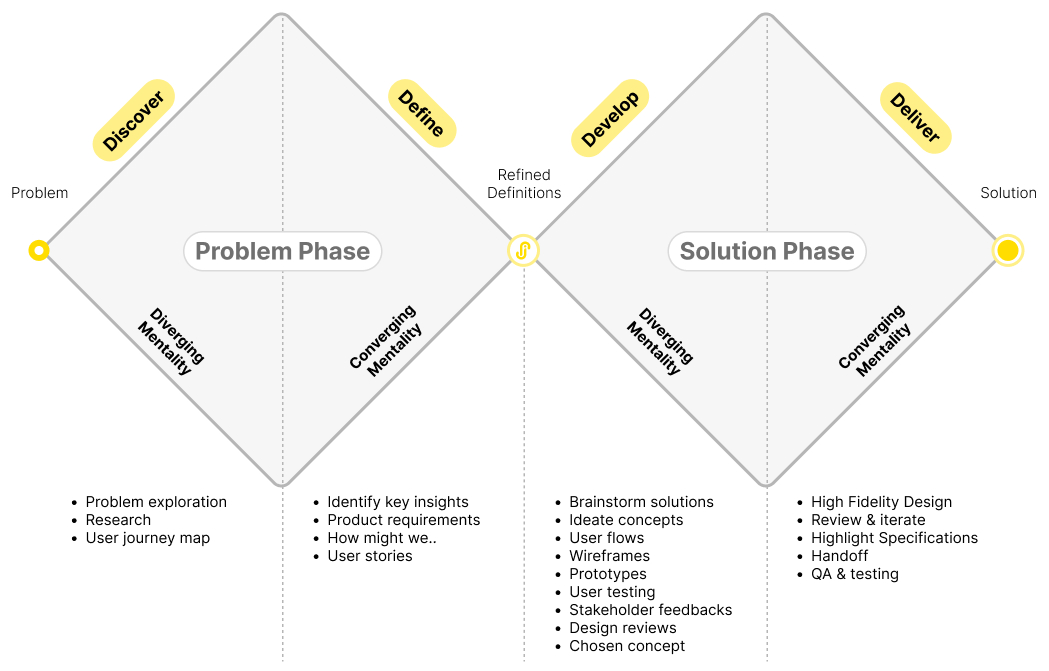
I use the Double Diamond as a guiding framework to better understand and communicate the design process. After exploring various articles and perspectives, I developed my own interpretation to help break down each stage clearly and make the process more intuitive for myself.
Problem
Based on some detectors in the NPS survey, we needed to drive engagement outside of content and draw users to content through engagement. The platform needed to feel less like a LMS tool to users and drive more interaction.
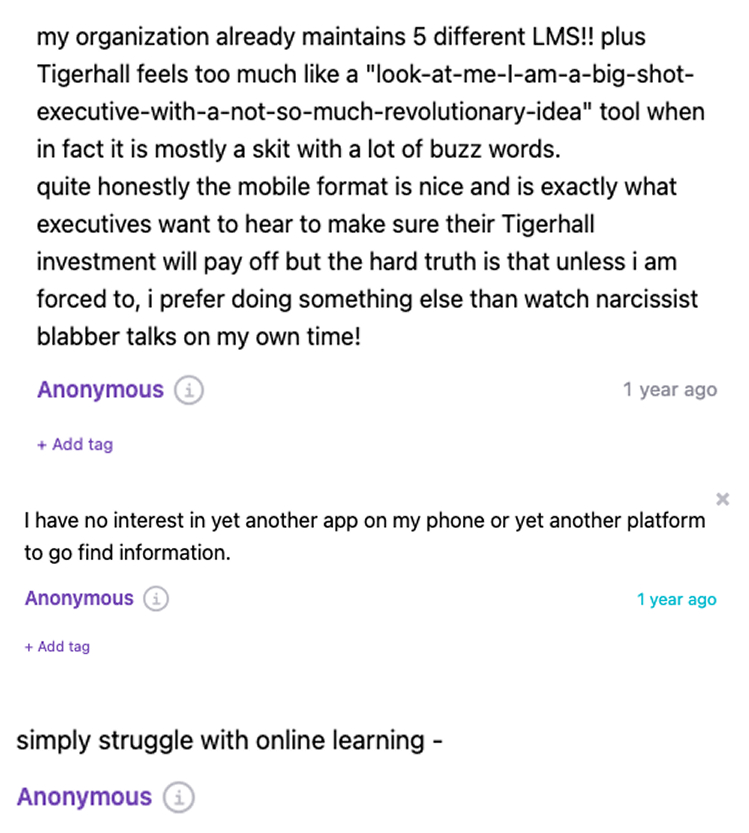
Some common issues voiced by users are the amount of LMS tools they have in the organization, and that it is just another information platform. Also, some struggle with with online learning.
Discover
The product team held discussions along with customer success team and business development teams on the about the outlook of Engagement and areas we would like to address.
The discussions encompassed:
- Understanding the goals and needs
- Highlighting the areas of a driving engagement
- Determining the a guide to a Minimum Viable Product and future improvements
Along with addressing issues of driving more engagement, business teams mentioned the need to create another layer of draw to the product besides just content on the platform.
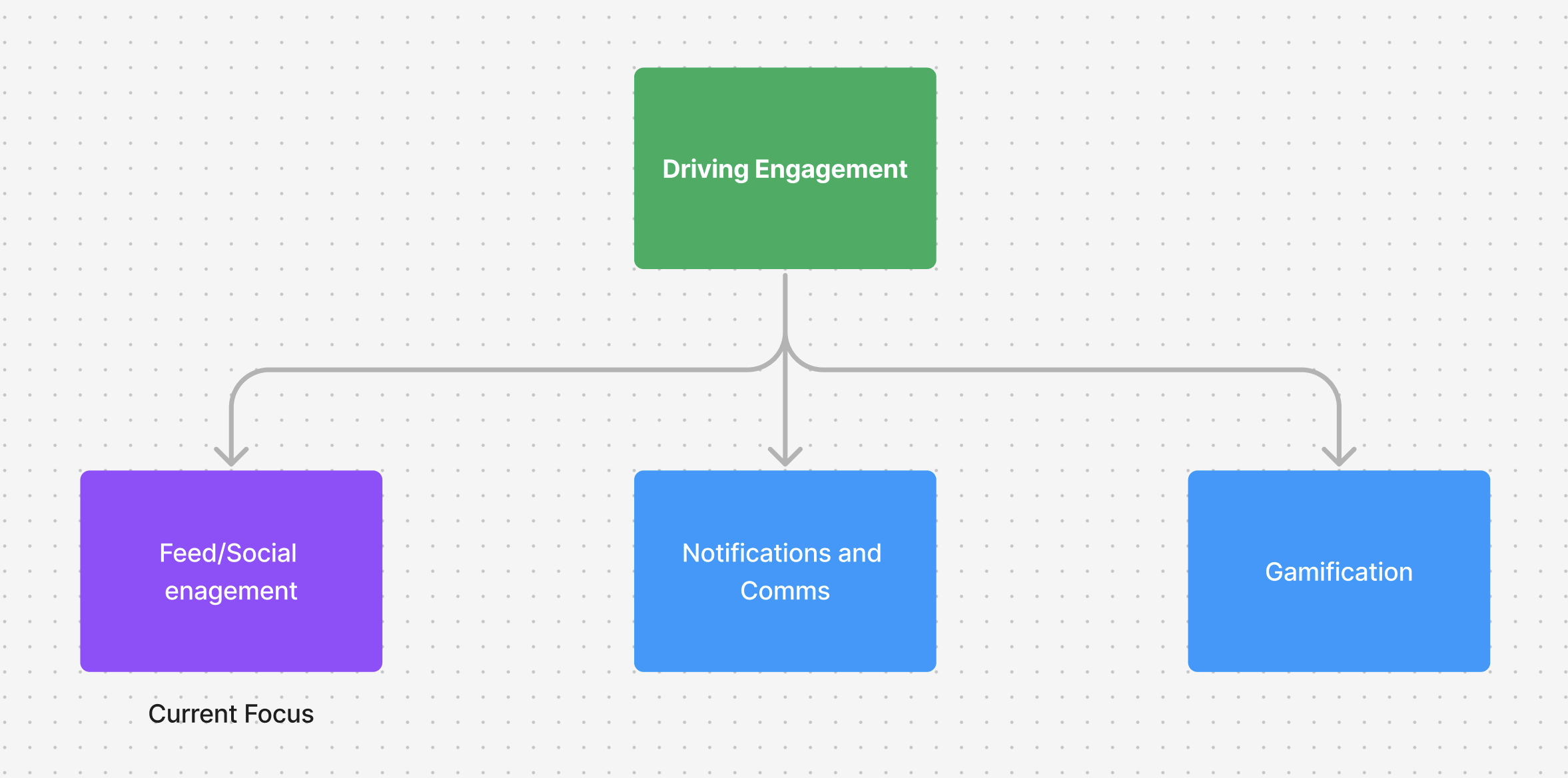
During our research, we identified key areas and their components, ultimately narrowing our focus to “Feed Types & Structure” and “Feed Recommendations” as areas we want to be looking into.

Research
We looked into social sites that has a feed like Linkedin, Facebook. Identified different post types, social connections & interactions, and content recommendations.

Defined the Scope
We defined the overall scope as follows:
- An engagement feed similar to social media platforms.
- Begin with core features such as posting, sharing, commenting, and reacting.
- Design the feed to also facilitate content discovery through other users’ activities.
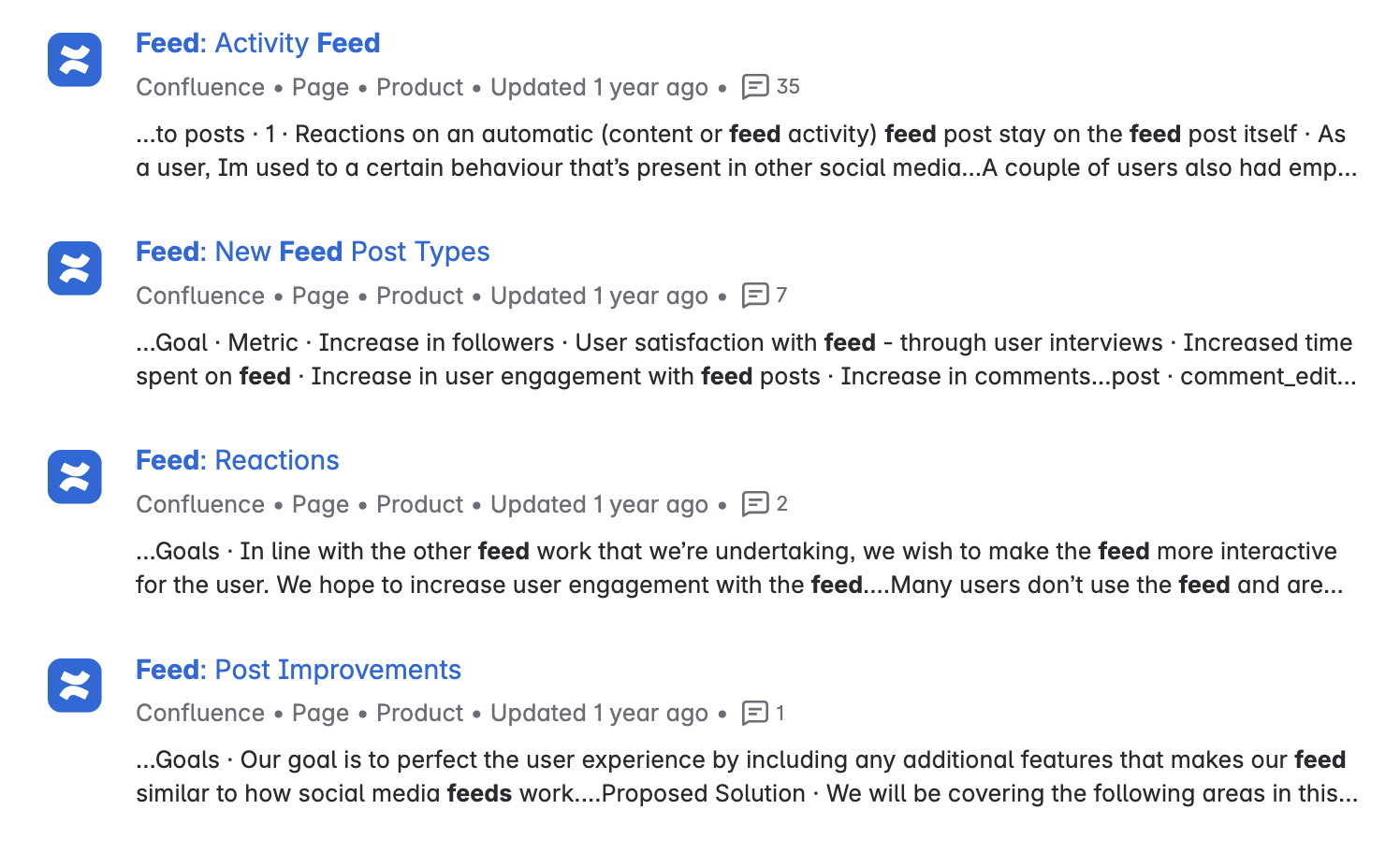
Given the scope of the feed feature, we divided the work into four key product requirement documents, focusing on Activity, Post Types, Reactions, and overall Improvements.
Brainstorming & Gathering Insights
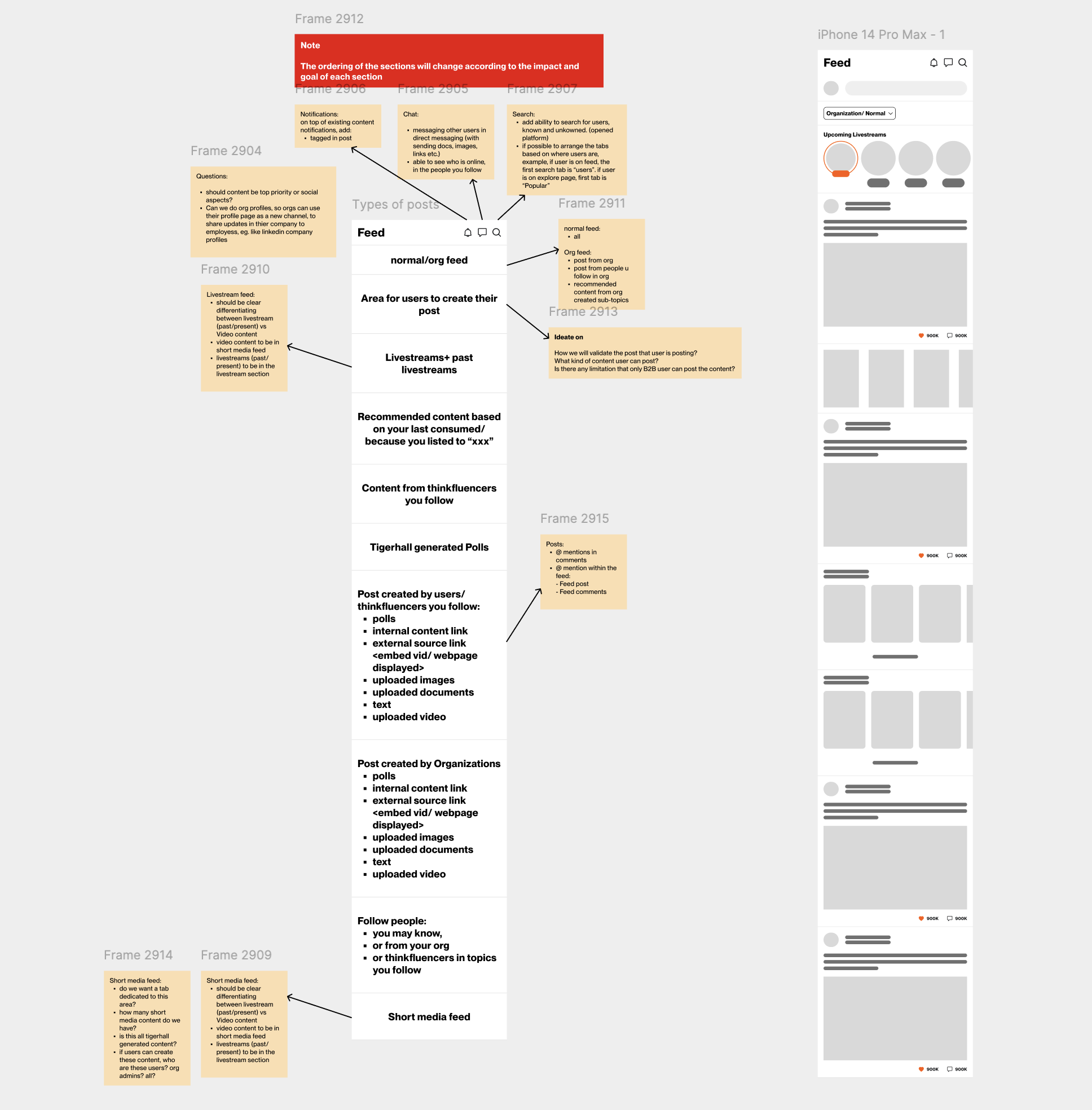
I created low-fidelity wireframes with key details highlighted, and used them in discussions with product and engineering teams to support collaboration and clearly communicate design concepts.
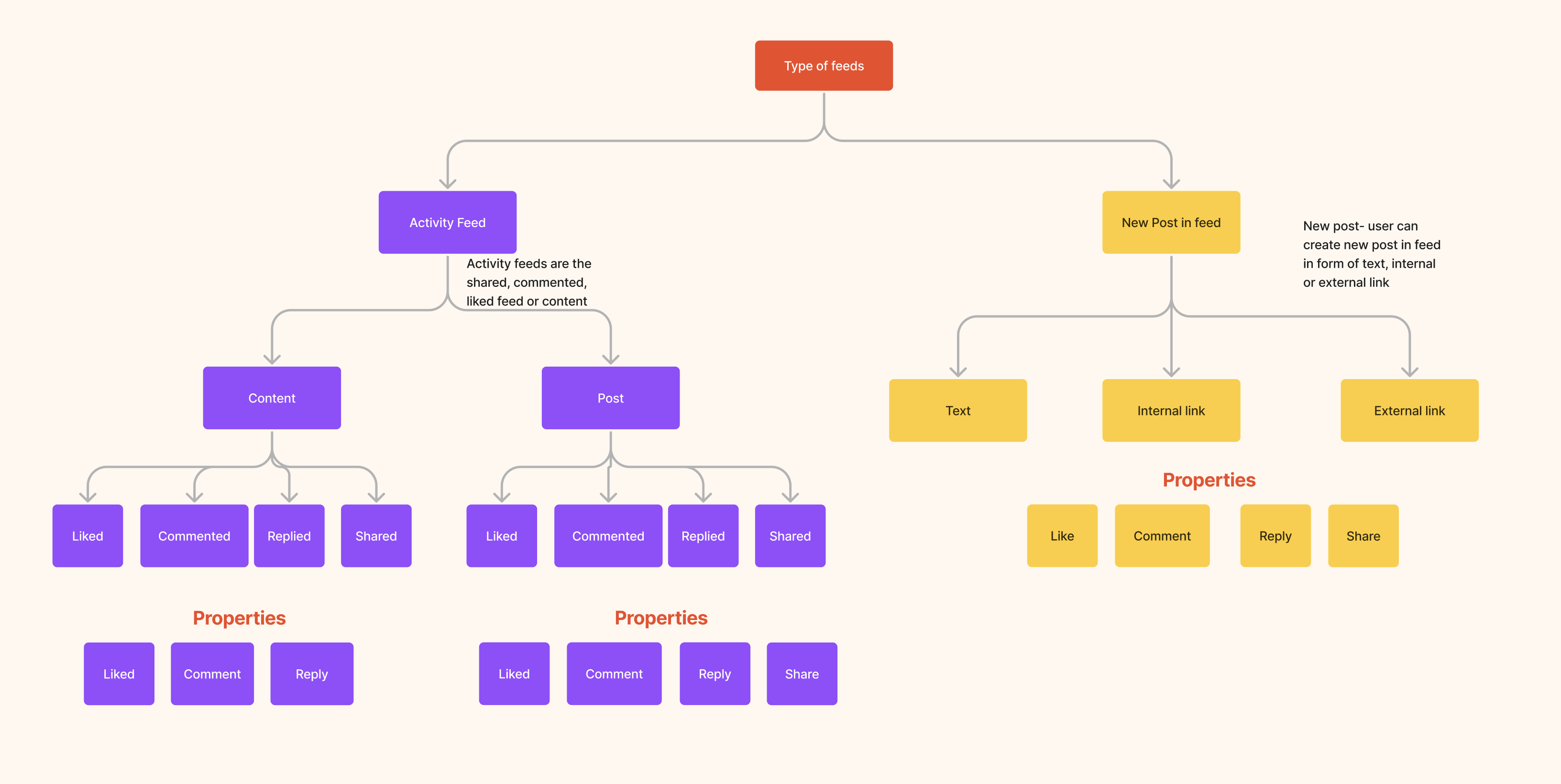
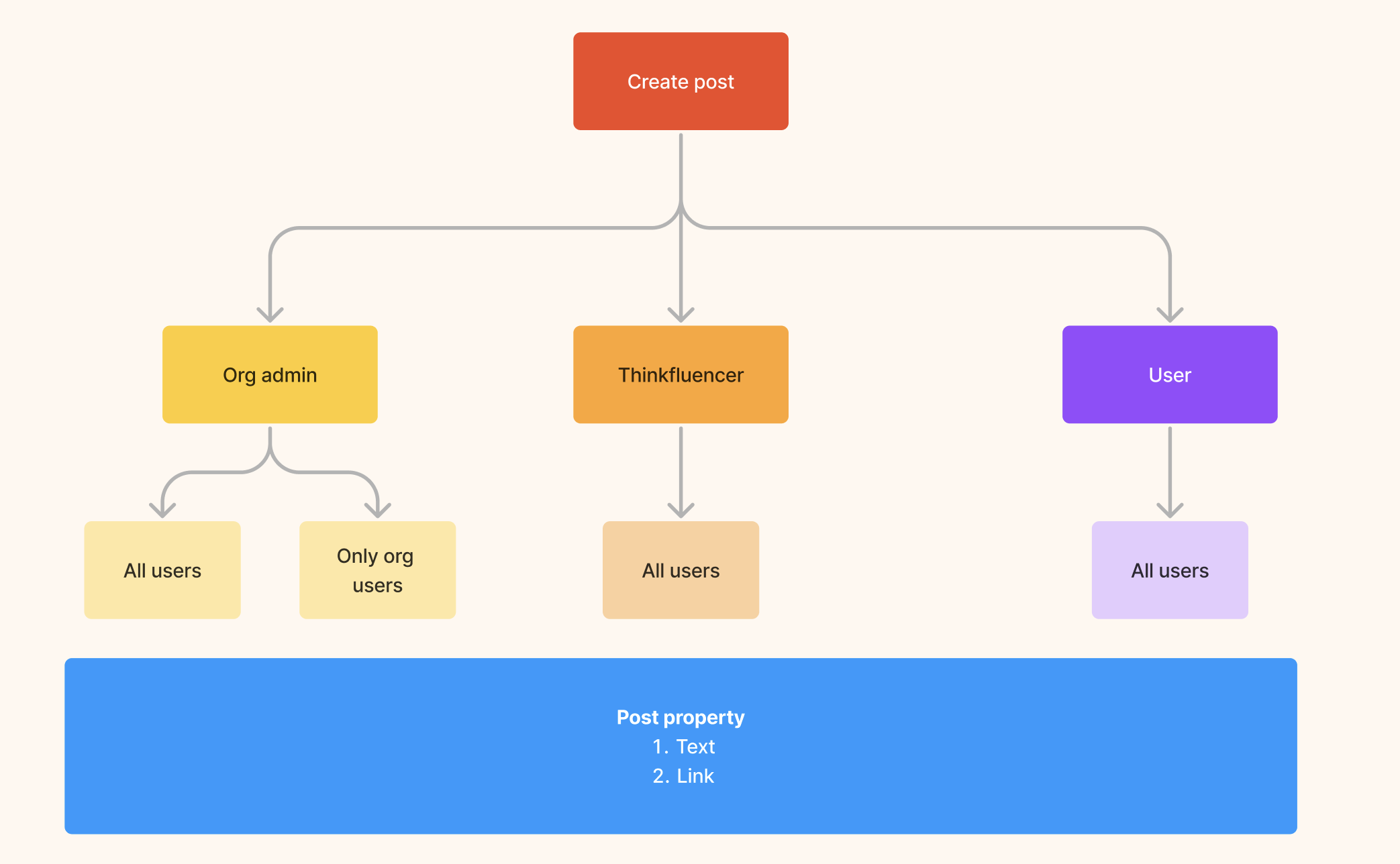
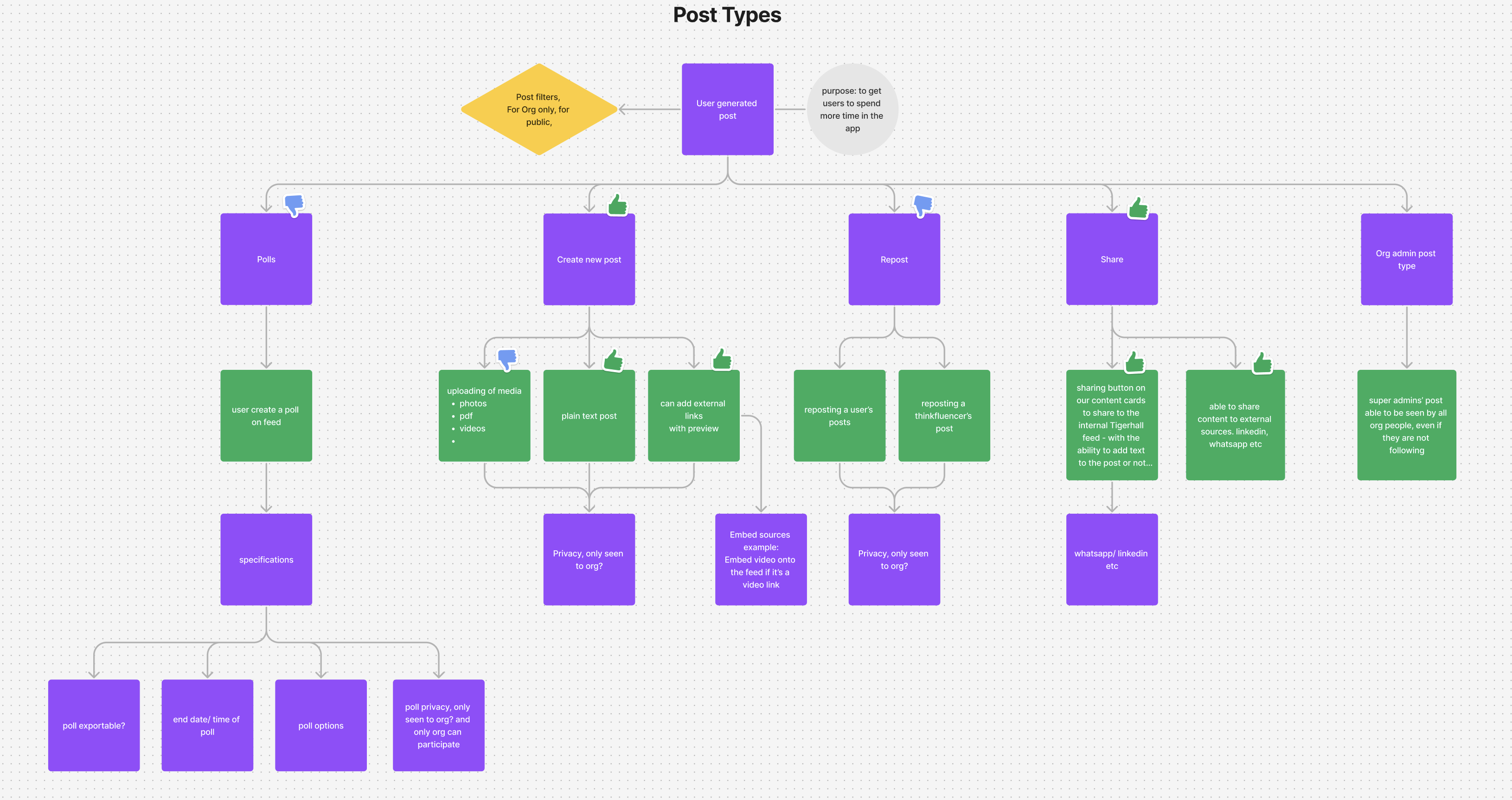
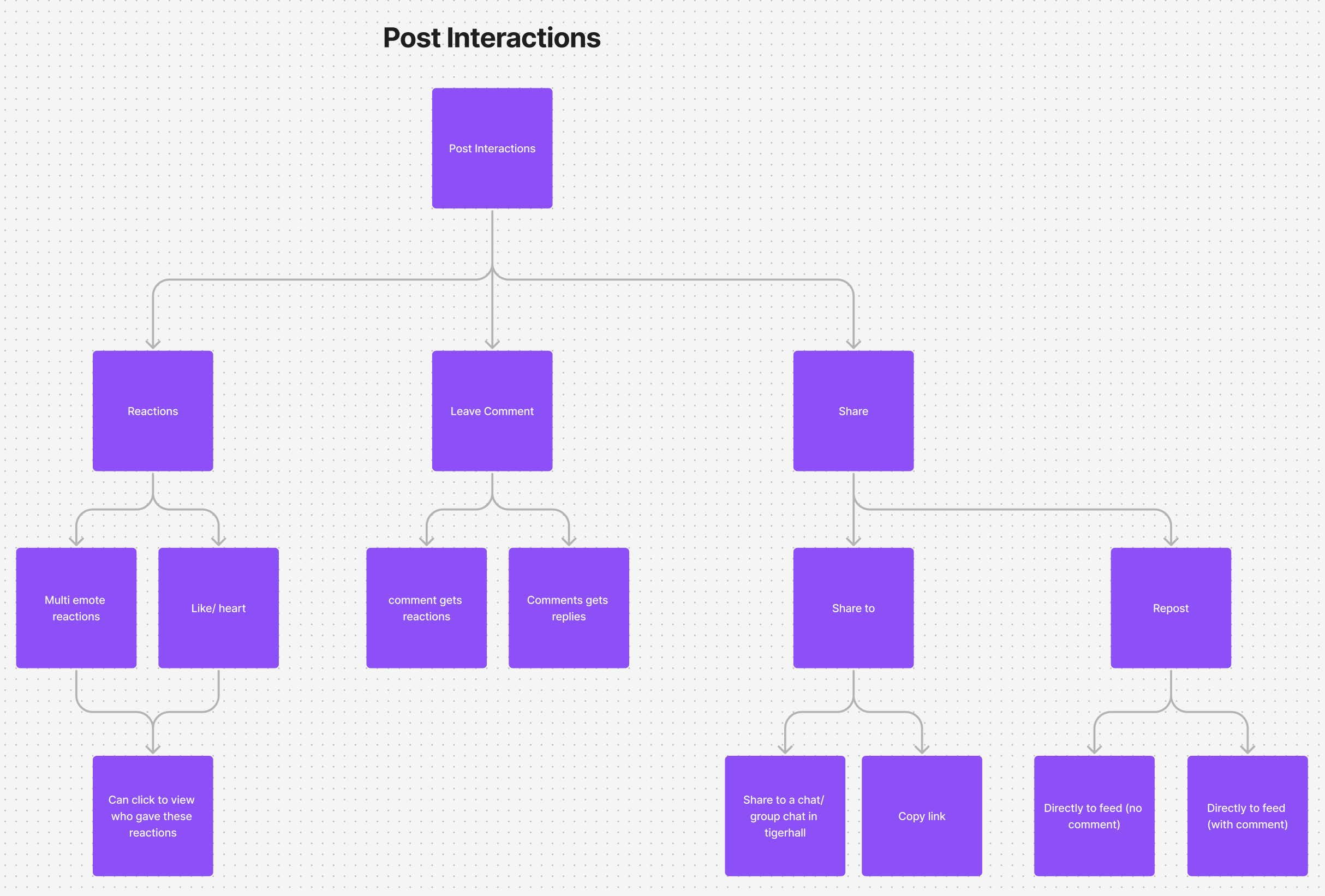
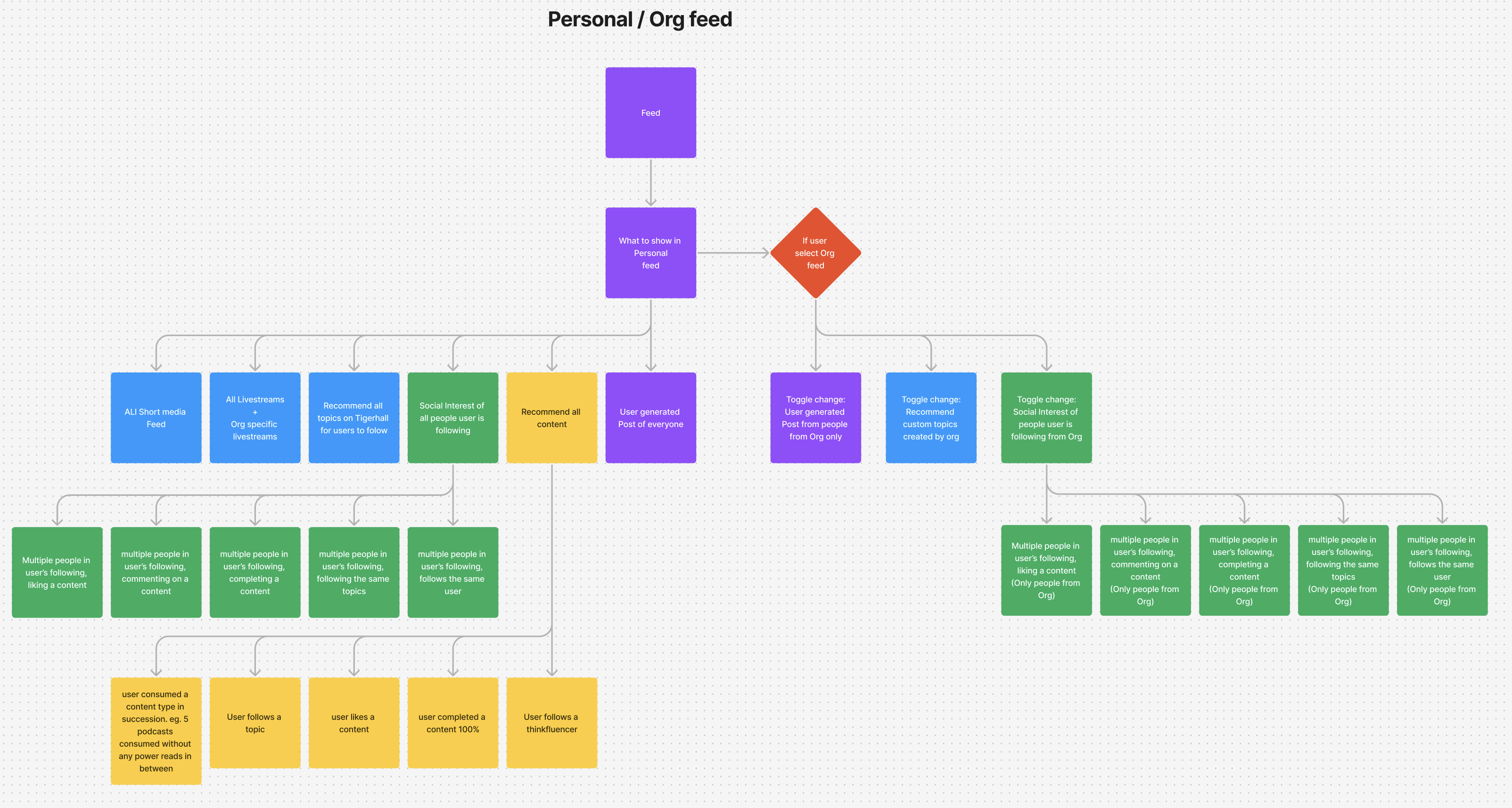
Through collaborative discussions, we began developing flowcharts for various aspects of the experience. Including Feed Types, Post Creation, Recommendations, Post Types, Interactions, and considerations for Personal vs. Organisational Feeds.

Designing
As I developed the designs, I organized them into distinct sections such as “Feed Page,” “Creating a New Post,” and “Post Options” to ensure clarity and structure.

While designing the UI, I ensured that user flows were provided where necessary for example, outlining how creating a new post for different audience types would work, and how post visibility would appear to users within the app.

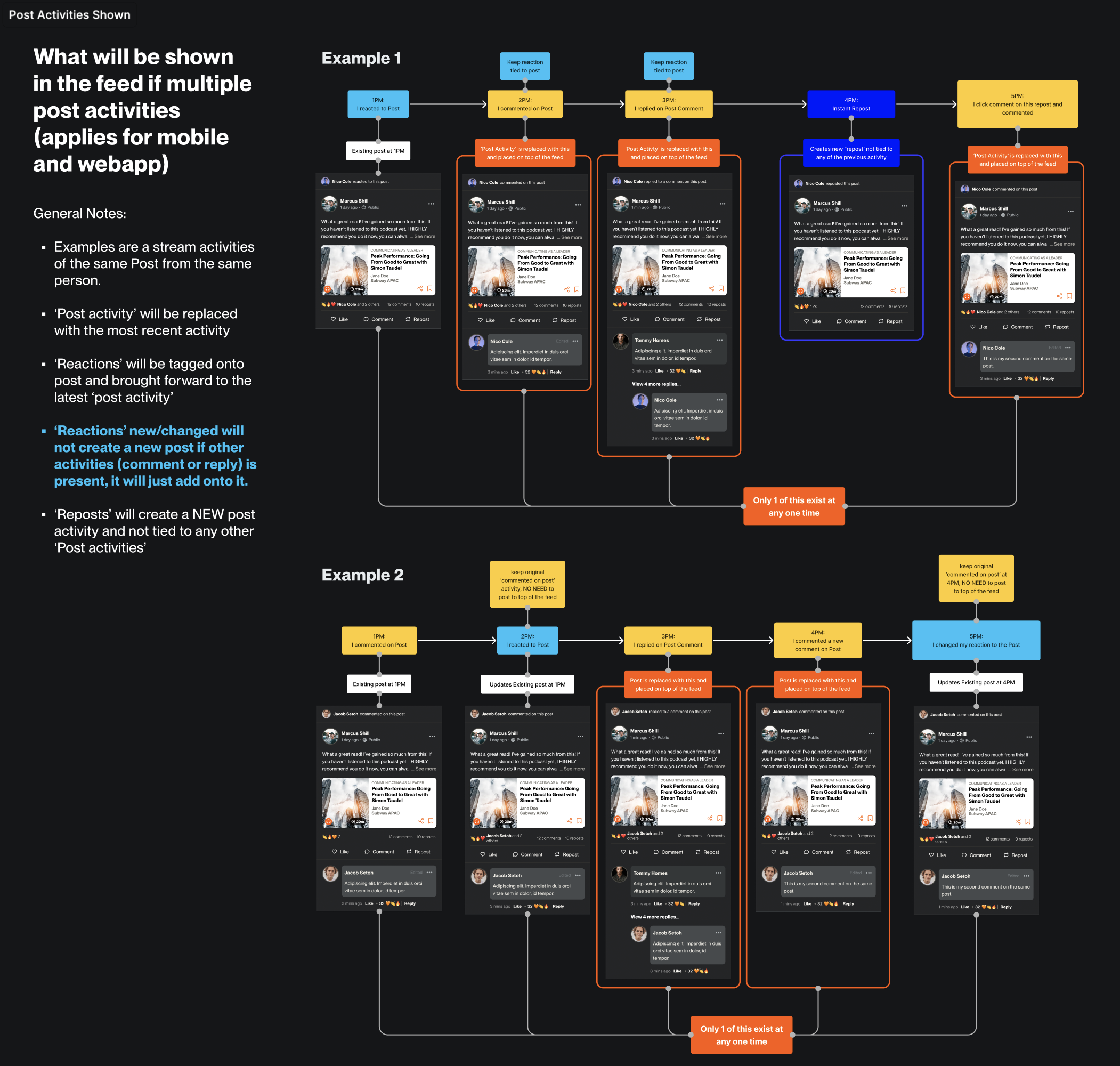
Due to the complexity of multiple users performing similar actions, duplicate activities were being generated. These needed to be consolidated to prevent users from seeing repeated instances of the same activity triggered by different connected users.
Handing Off
I held meetings with engineers to walk through the designs, highlighting how each screen aligned with the product requirements.
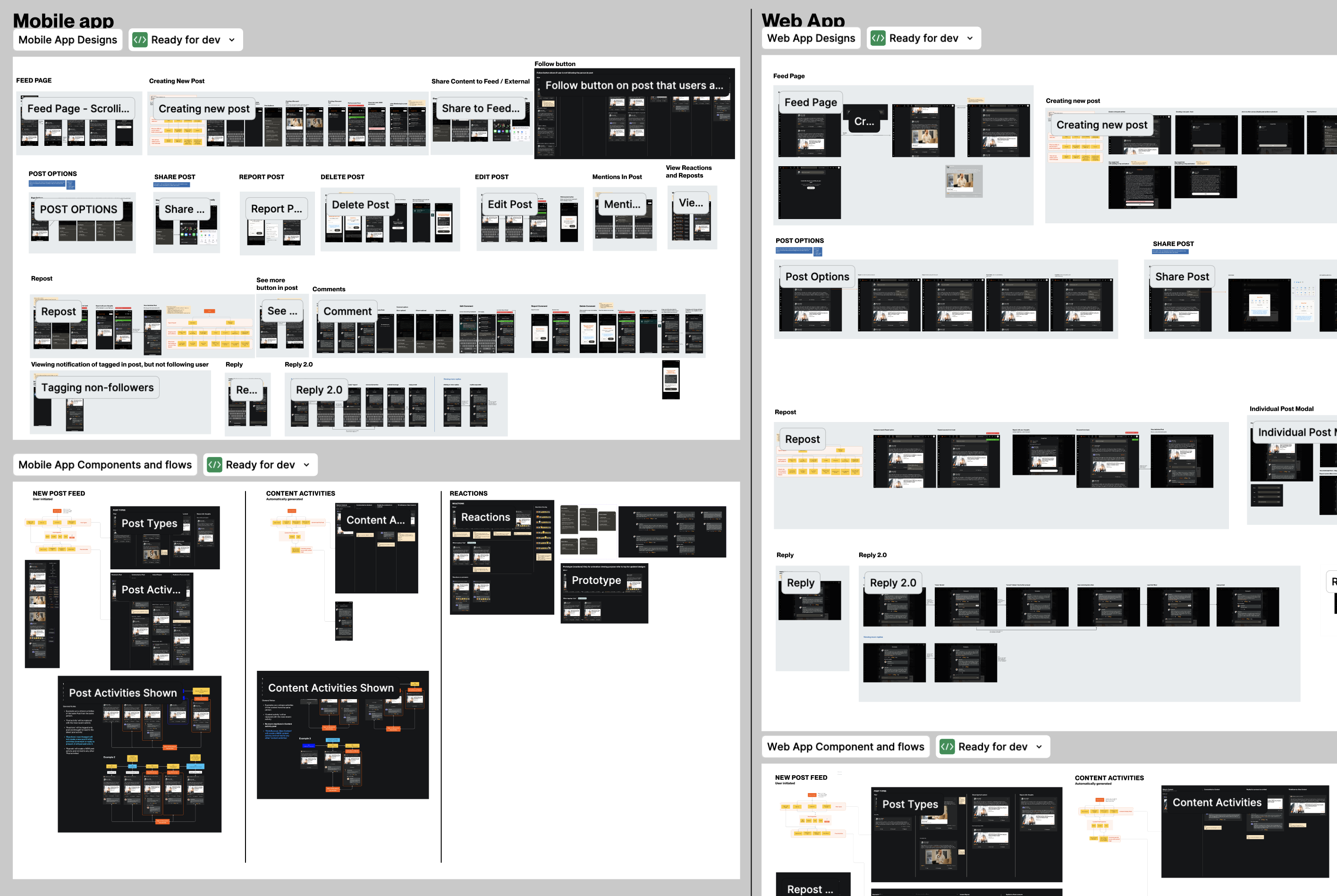
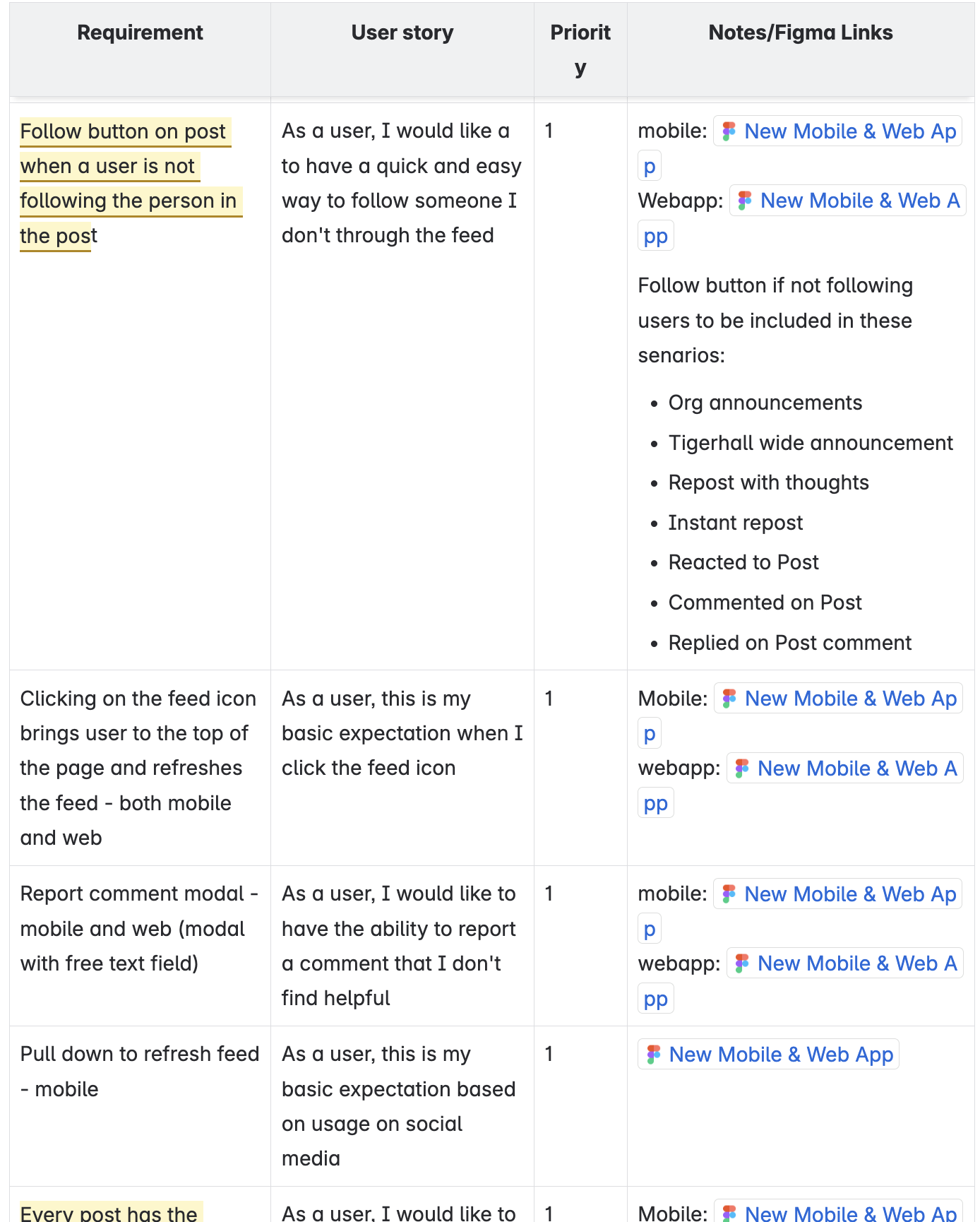
For each PRD, I included links to the corresponding sections in Figma to ensure engineers could easily access the designs and implement the requirements efficiently.
Analysis
As this was a new feature within the app, there was no existing data at launch. Over time, we tracked its performance using Amplitude and created charts to monitor key outcomes.

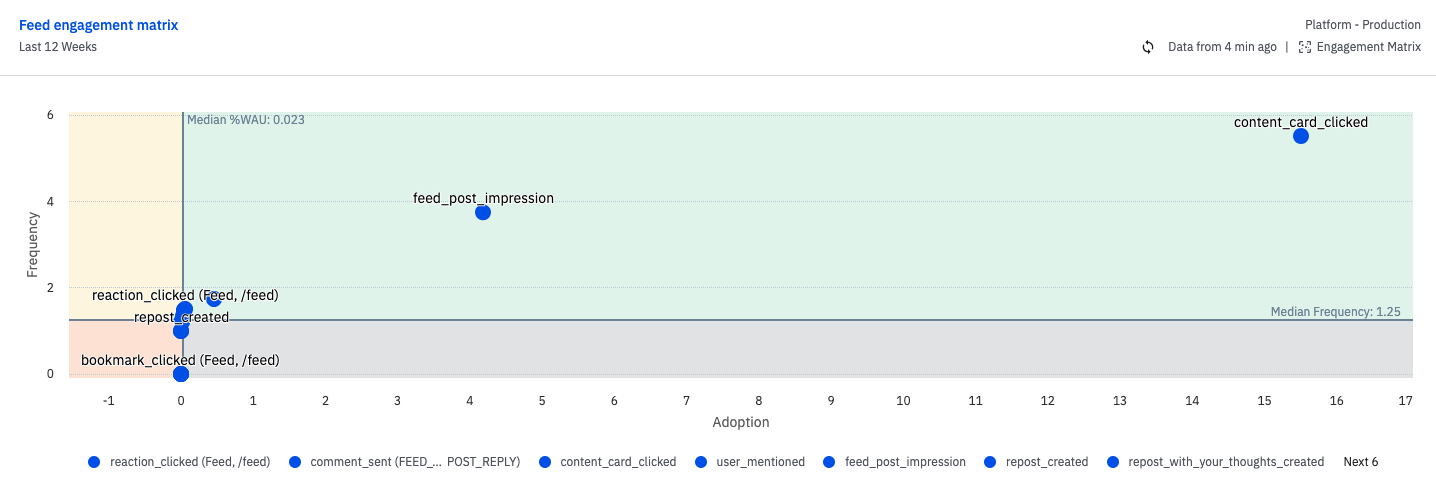
The charts show that while the number of users creating new posts was relatively low, post impressions remained decent, peaking at 2,691 per week. Additionally, content cards within “Activity” posts received a notable number of clicks.
Overall, it introduced a new way for users to discover content by engaging with the activities of others, such as consuming and recommending content on the platform.
More Projects


Interactive Feed
Feed, Activities, Posts, Comments, Reactions
Overview
Tigerhall began as content platform led by industry experts known as "Thinkfluencers", serving B2C customers using podcasts, videos, livestreams and power reads. It has since evolved towards a B2B tool for organisations to drive change activation initiatives through organisation created content, assigning content tasks, statistics and report builders.
Role
Product Designer
Product research, UX research, UI design, Flows structure
How I Process Design
I use the Double Diamond as a guiding framework to better understand and communicate the design process. After exploring various articles and perspectives, I developed my own interpretation to help break down each stage clearly and make the process more intuitive for myself.
Problem
Based on some detectors in the NPS survey, we needed to drive engagement outside of content and draw users to content through engagement. The platform needed to feel less like a LMS tool to users and drive more interaction.
Some common issues voiced by users are the amount of LMS tools they have in the organization, and that it is just another information platform. Also, some struggle with with online learning.
Discover
The product team held discussions along with customer success team and business development teams on the about the outlook of Engagement and areas we would like to address.
The discussions encompassed:
- Understanding the goals and needs
- Highlighting the areas of a driving engagement
- Determining the a guide to a Minimum Viable Product and future improvements
Along with addressing issues of driving more engagement, business teams mentioned the need to create another layer of draw to the product besides just content on the platform.
During our research, we identified key areas and their components, ultimately narrowing our focus to “Feed Types & Structure” and “Feed Recommendations” as areas we want to be looking into.
Research
We looked into social sites that has a feed like Linkedin, Facebook. Identified different post types, social connections & interactions, and content recommendations.
Defined the Scope
We defined the overall scope as follows:
- An engagement feed similar to social media platforms.
- Begin with core features such as posting, sharing, commenting, and reacting.
- Design the feed to also facilitate content discovery through other users’ activities.
Given the scope of the feed feature, we divided the work into four key product requirement documents, focusing on Activity, Post Types, Reactions, and overall Improvements.
Brainstorming & Gathering Insights
I created low-fidelity wireframes with key details highlighted, and used them in discussions with product and engineering teams to support collaboration and clearly communicate design concepts.
Through collaborative discussions, we began developing flowcharts for various aspects of the experience. Including Feed Types, Post Creation, Recommendations, Post Types, Interactions, and considerations for Personal vs. Organisational Feeds.
Designing
As I developed the designs, I organized them into distinct sections such as “Feed Page,” “Creating a New Post,” and “Post Options” to ensure clarity and structure.
While designing the UI, I ensured that user flows were provided where necessary for example, outlining how creating a new post for different audience types would work, and how post visibility would appear to users within the app.
Due to the complexity of multiple users performing similar actions, duplicate activities were being generated. These needed to be consolidated to prevent users from seeing repeated instances of the same activity triggered by different connected users.
Handing Off
I held meetings with engineers to walk through the designs, highlighting how each screen aligned with the product requirements.
For each PRD, I included links to the corresponding sections in Figma to ensure engineers could easily access the designs and implement the requirements efficiently.
Analysis
As this was a new feature within the app, there was no existing data at launch. Over time, we tracked its performance using Amplitude and created charts to monitor key outcomes.
The charts show that while the number of users creating new posts was relatively low, post impressions remained decent, peaking at 2,691 per week. Additionally, content cards within “Activity” posts received a notable number of clicks.
Overall, it introduced a new way for users to discover content by engaging with the activities of others, such as consuming and recommending content on the platform.
More Projects


Interactive Feed
Feed, Activities, Posts, Comments, Reactions
Overview
Tigerhall began as content platform led by industry experts known as "Thinkfluencers", serving B2C customers using podcasts, videos, livestreams and power reads. It has since evolved towards a B2B tool for organisations to drive change activation initiatives through organisation created content, assigning content tasks, statistics and report builders.
Role
Product Designer
Product research, UX research, UI design, Flows structure
How I Process Design
I use the Double Diamond as a guiding framework to better understand and communicate the design process. After exploring various articles and perspectives, I developed my own interpretation to help break down each stage clearly and make the process more intuitive for myself.
Problem
Based on some detectors in the NPS survey, we needed to drive engagement outside of content and draw users to content through engagement. The platform needed to feel less like a LMS tool to users and drive more interaction.
Some common issues voiced by users are the amount of LMS tools they have in the organisation, and that it is just another information platform. Also, some struggle with with online learning.
Discover
The product team held discussions along with customer success team and business development teams on the about the outlook of Engagement and areas we would like to address.
The discussions encompassed:
- Understanding the goals and needs
- Highlighting the areas of a driving engagement
- Determining the a guide to a Minimum Viable Product and future improvements
Along with addressing issues of driving more engagement, business teams mentioned the need to create another layer of draw to the product besides just content on the platform.
During our research, we identified key areas and their components, ultimately narrowing our focus to “Feed Types & Structure” and “Feed Recommendations” as areas we want to be looking into.
Research
We looked into social sites that has a feed like Linkedin, Facebook. Identified different post types, social connections & interactions, and content recommendations.
Defined the Scope
We defined the overall scope as follows:
- An engagement feed similar to social media platforms.
- Begin with core features such as posting, sharing, commenting, and reacting.
- Design the feed to also facilitate content discovery through other users’ activities.
Given the scope of the feed feature, we divided the work into four key product requirement documents, focusing on Activity, Post Types, Reactions, and overall Improvements.
Brainstorming & Gathering Insights
I created low-fidelity wireframes with key details highlighted, and used them in discussions with product and engineering teams to support collaboration and clearly communicate design concepts.
Through collaborative discussions, we began developing flowcharts for various aspects of the experience. Including Feed Types, Post Creation, Recommendations, Post Types, Interactions, and considerations for Personal vs. Organisational Feeds.
Designing
As I developed the designs, I organized them into distinct sections such as “Feed Page,” “Creating a New Post,” and “Post Options” to ensure clarity and structure.
While designing the UI, I ensured that user flows were provided where necessary for example, outlining how creating a new post for different audience types would work, and how post visibility would appear to users within the app.
Due to the complexity of multiple users performing similar actions, duplicate activities were being generated. These needed to be consolidated to prevent users from seeing repeated instances of the same activity triggered by different connected users.
Handing Off
I held meetings with engineers to walk through the designs, highlighting how each screen aligned with the product requirements.
For each PRD, I included links to the corresponding sections in Figma to ensure engineers could easily access the designs and implement the requirements efficiently.
Analysis
As this was a new feature within the app, there was no existing data at launch. Over time, we tracked its performance using Amplitude and created charts to monitor key outcomes.
The charts show that while the number of users creating new posts was relatively low, post impressions remained decent, peaking at 2,691 per week. Additionally, content cards within “Activity” posts received a notable number of clicks.
Overall, it introduced a new way for users to discover content by engaging with the activities of others, such as consuming and recommending content on the platform.
More Projects
